Flashcards for education — and for a language you actually live in
A word you half caught
becomes a card tonight.
The rest is yours.
You bring the word.
The card writes itself.
The remembering is yours.
It does the looking up.
It does the typing.
It will not do the knowing.
You heard it once.
By tonight it is a card.
By Friday it is yours.
Bring a word. Bring a page.
The cards write themselves.
The knowing does not.
Paste the chapter you were set, or type a single word. acute writes the card — meaning, usage, the sentence you met it in, said aloud — and then stops, because the remembering was never the part that could be handed over.
acute for Web · acute for Mac
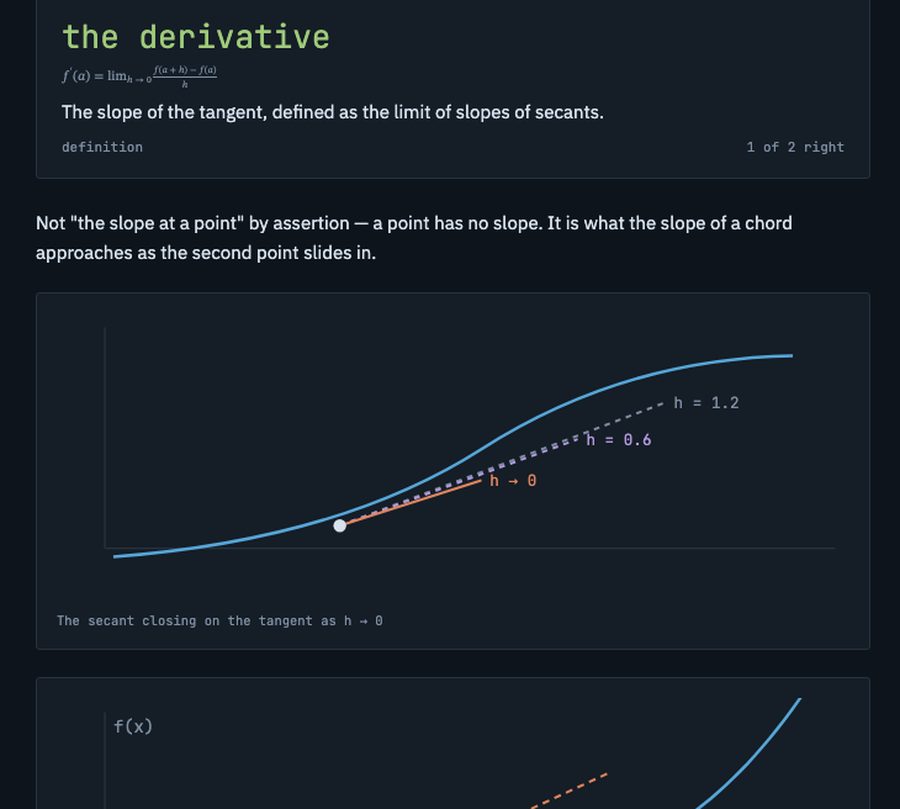
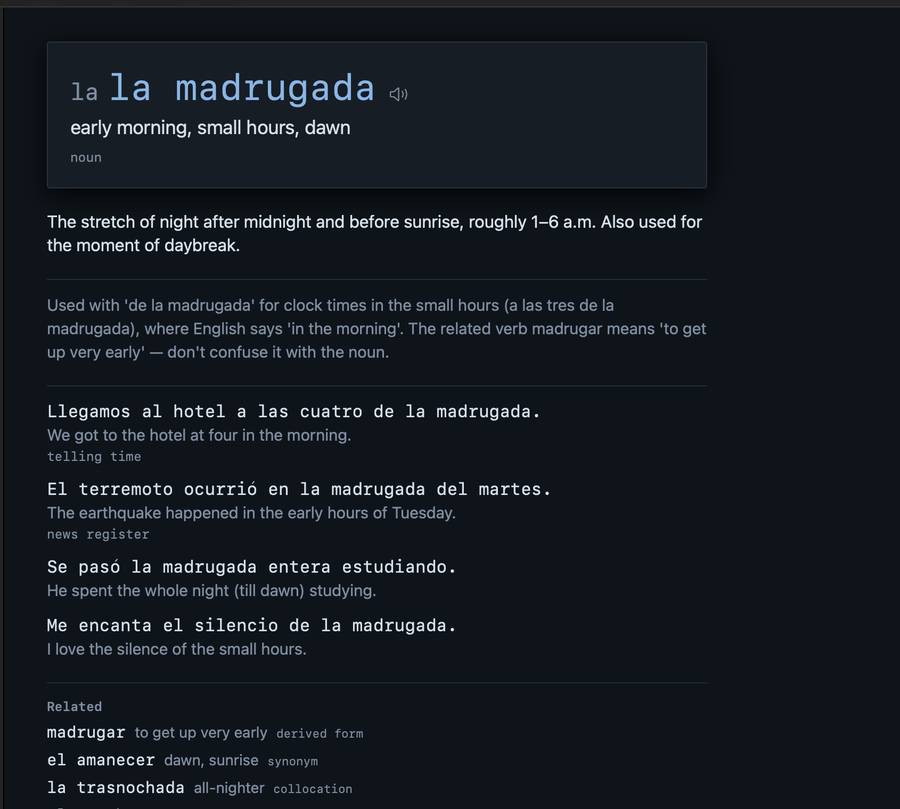
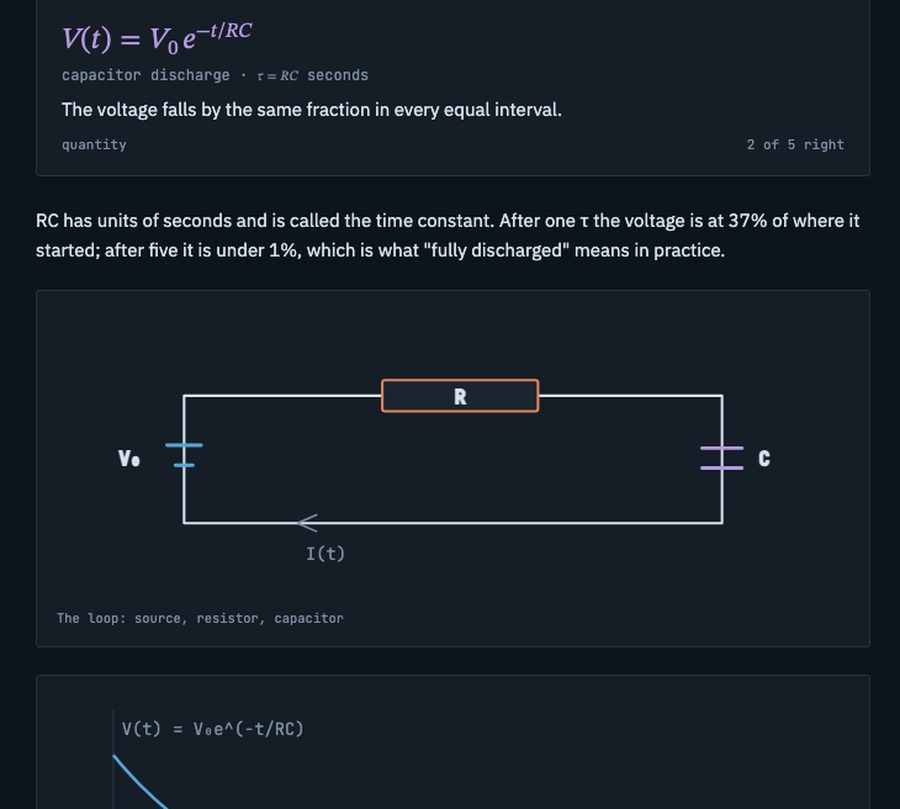
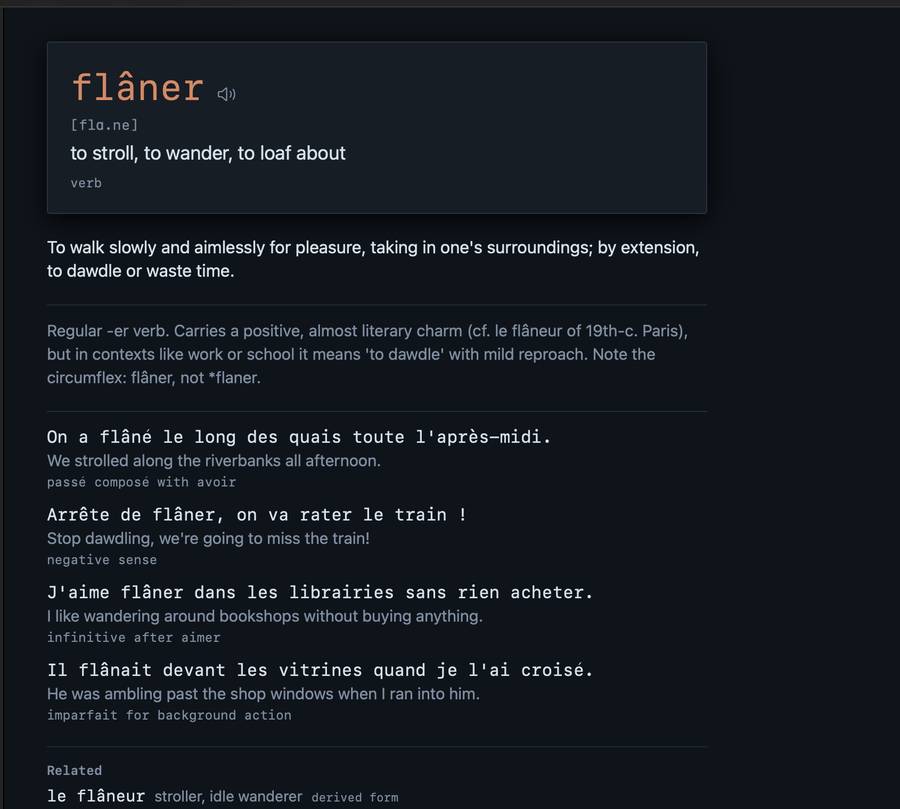
Yes, this is AI.
That is the point.
Every card is written for the sentence you met the word in. No dictionary knows that sentence, and none will warn you that the noun you just looked up is not the word you need to say ‘it is raining’.
What makes AI bad for learning is not that it is AI. It is that most of it answers the question you were about to think about.
where it is used
Reading a page, writing the card, answering a margin. All of it before you study.
where it is not
In the drill. Nothing is generated while you study, nothing hints, nothing marks you right.
and it is fallible
A model drafts; it does not rule. Rewrite a card you disagree with, or throw it away.
Languages first
A language is the hardest case: thousands of facts, each useless until you can produce it without looking. What works for that works wherever the answer is a formula, a mechanism or a name.
Words, phrases, genders, the sentence you met them in.
Identities and methods — the step you always forget, worked through.
Laws with their units, and what each one refuses to apply to.
Structures, pathways and names, in the order they happen.
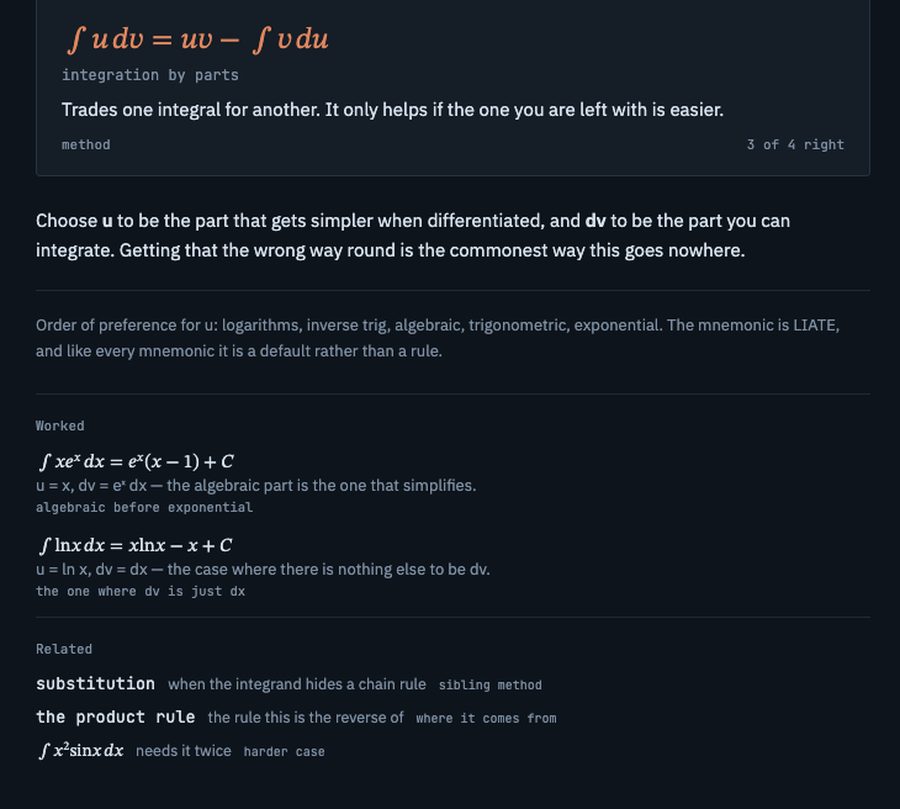
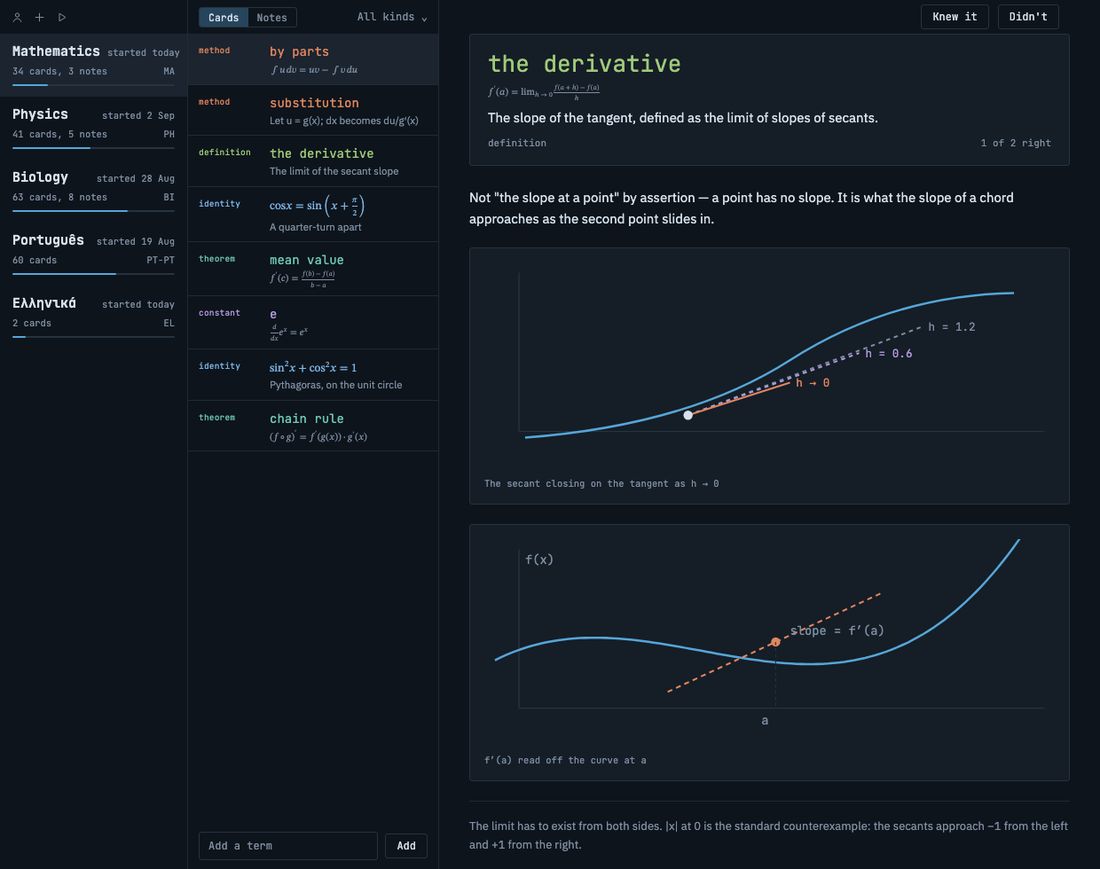
Maths the method, the two cases worth working, and why the order matters
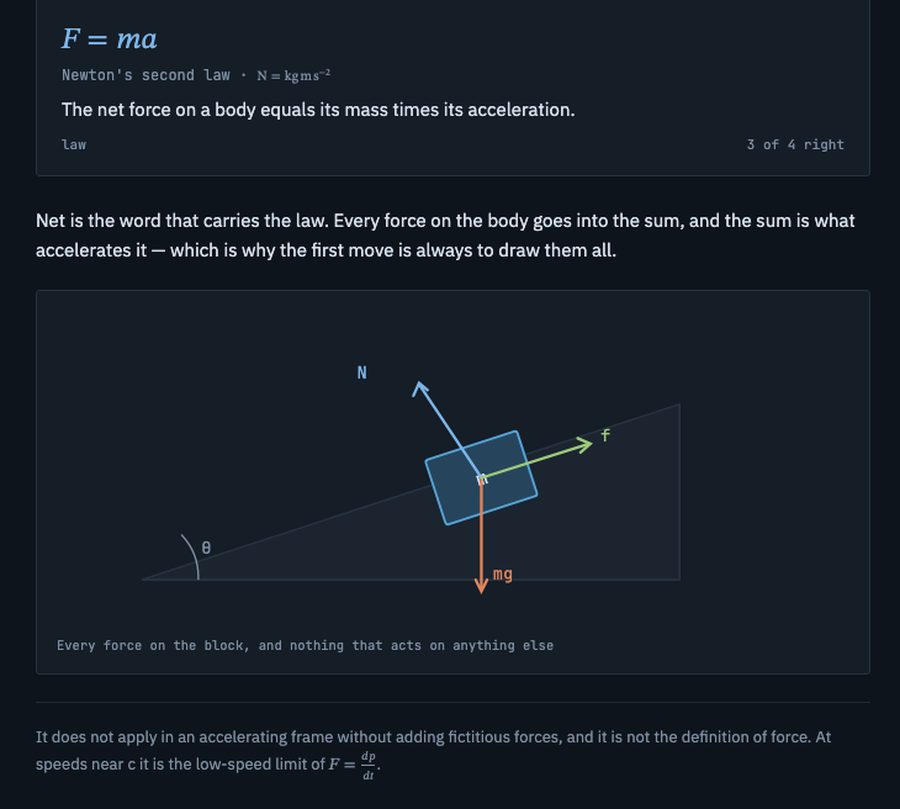
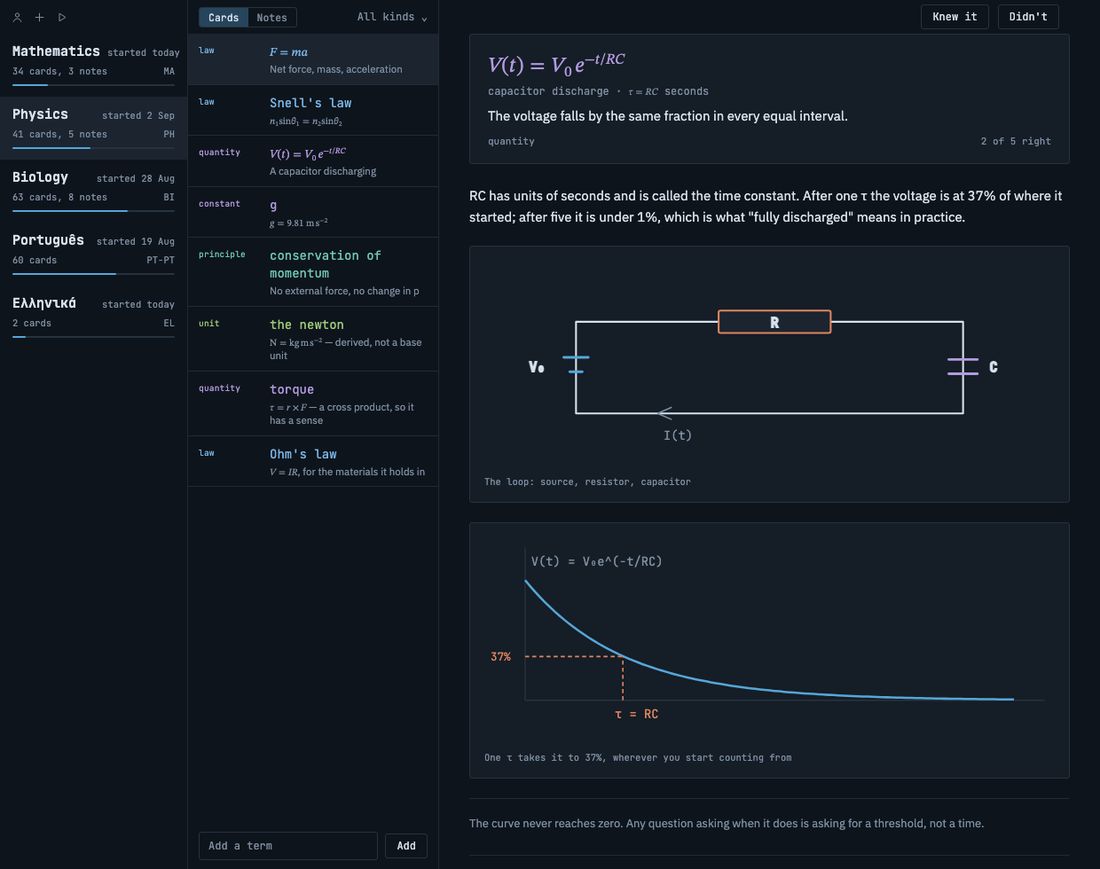
Physics the law, its units, and the diagram it is read off
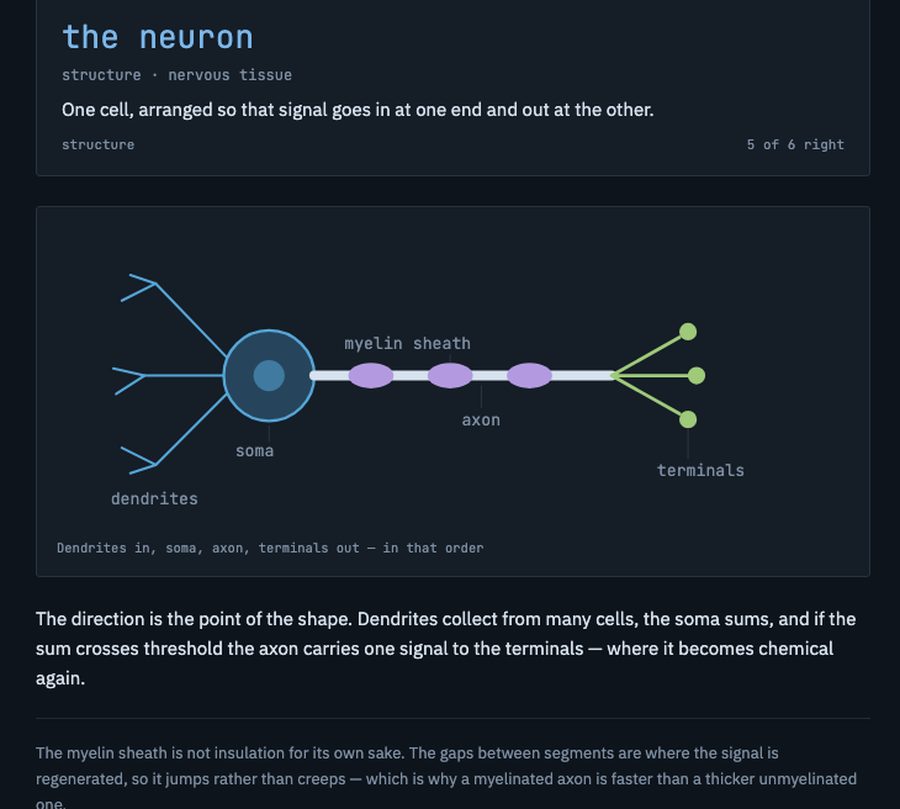
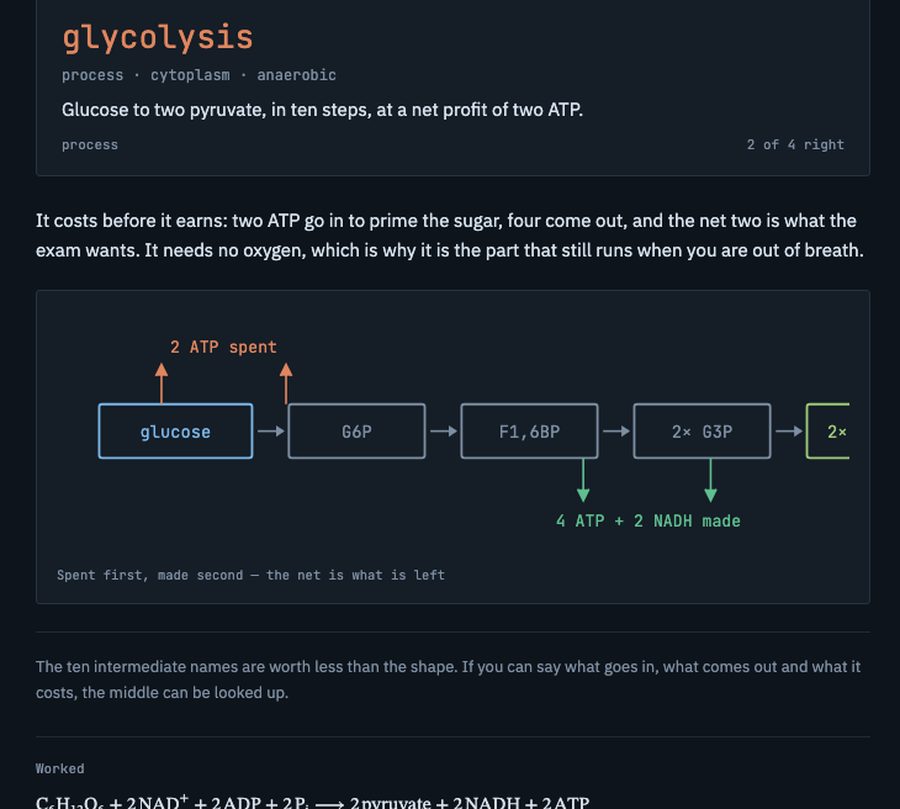
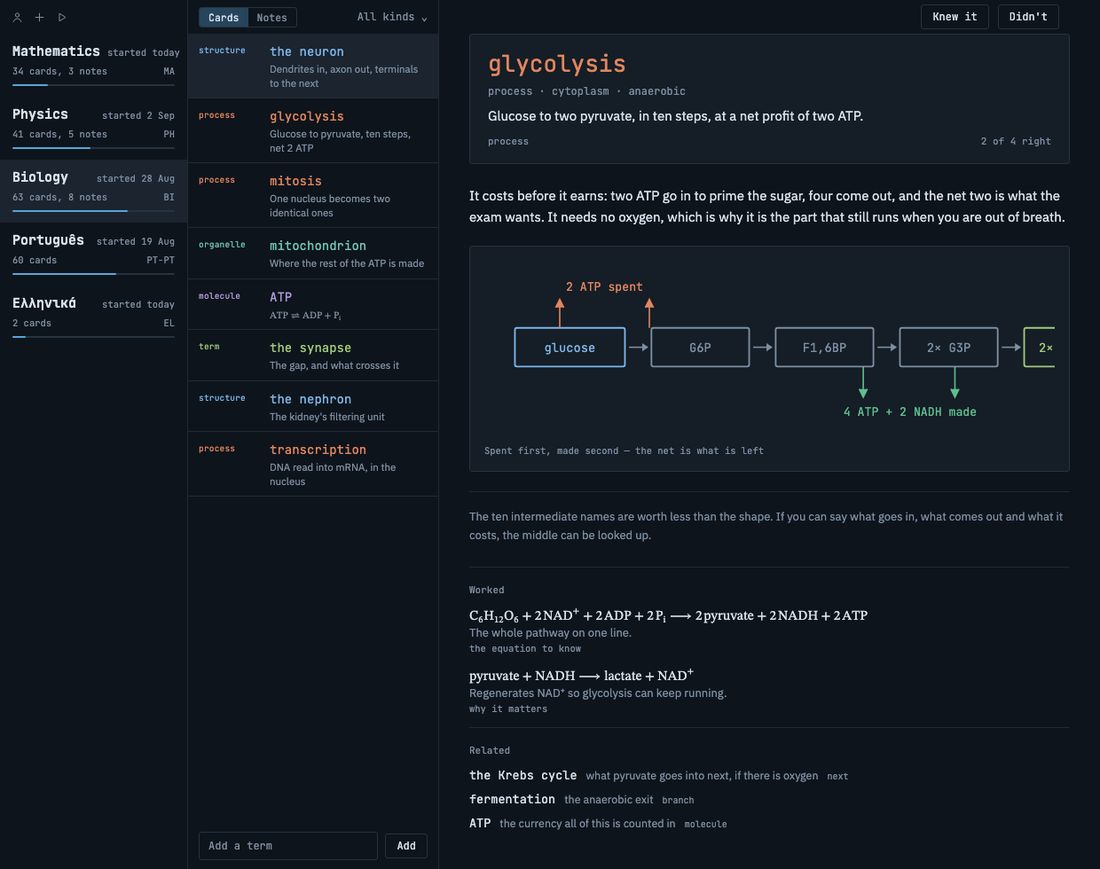
Biology the structure, labelled, and what the shape is for
Those three are design studies, not screenshots — nothing above is promised for a date. Languages is what exists today, and it is what the price buys.
Built for education
The set text, the terminology course, the year abroad. Learning that has a syllabus behind it and a date in front of it.
Students
Your set text is your deck. Paste the chapter you were assigned and get the words that matter, in the sense that chapter used them — not a general list built for someone else's course. The example on each card is the sentence you were actually asked to read.
Teachers and lecturers
Building a vocabulary list by hand is an evening's work per text. Paste the material you are teaching and read the cards back — keep the ones you want, rewrite the rest. The judgement stays yours; the typing does not.
Departments and language schools
Medicine, law, classics, engineering — courses where a general dictionary is the wrong tool because the register is the point.
Every account is personal today: you build your own shelf, and a teacher builds theirs. Handing a deck to a class, and the administration that comes with it, is not built yet — and nobody should buy on the strength of it.
How it works
Three steps, and you only do the first and the last.
one · you
Type the word
One you heard, read or half caught. Or paste a whole page and pick from what it finds.
two · acute
The card writes itself
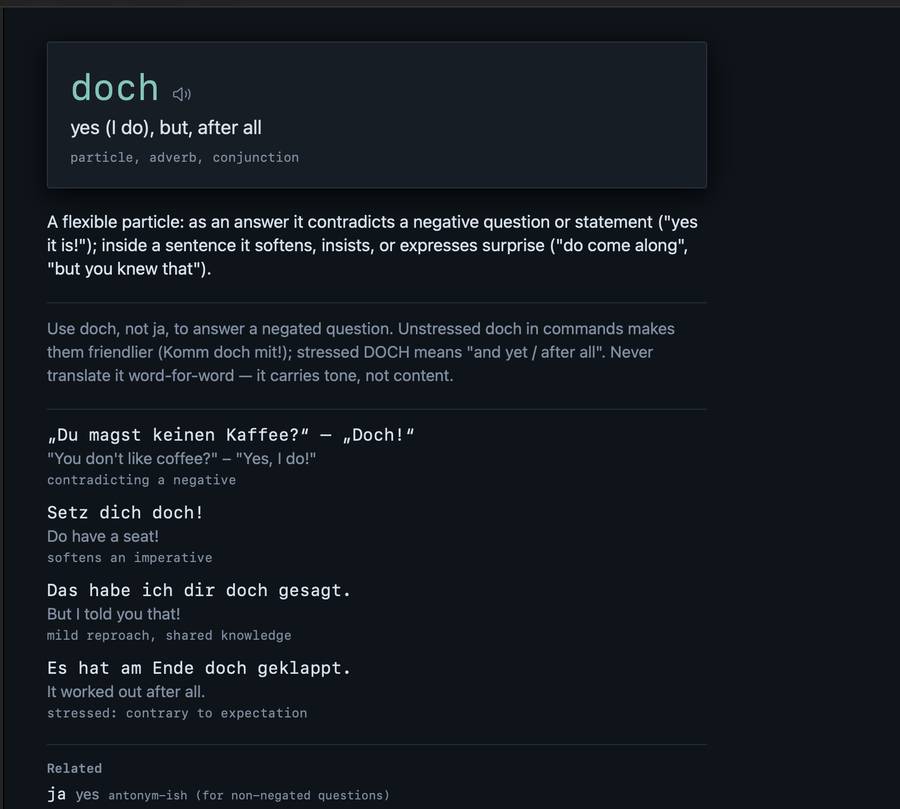
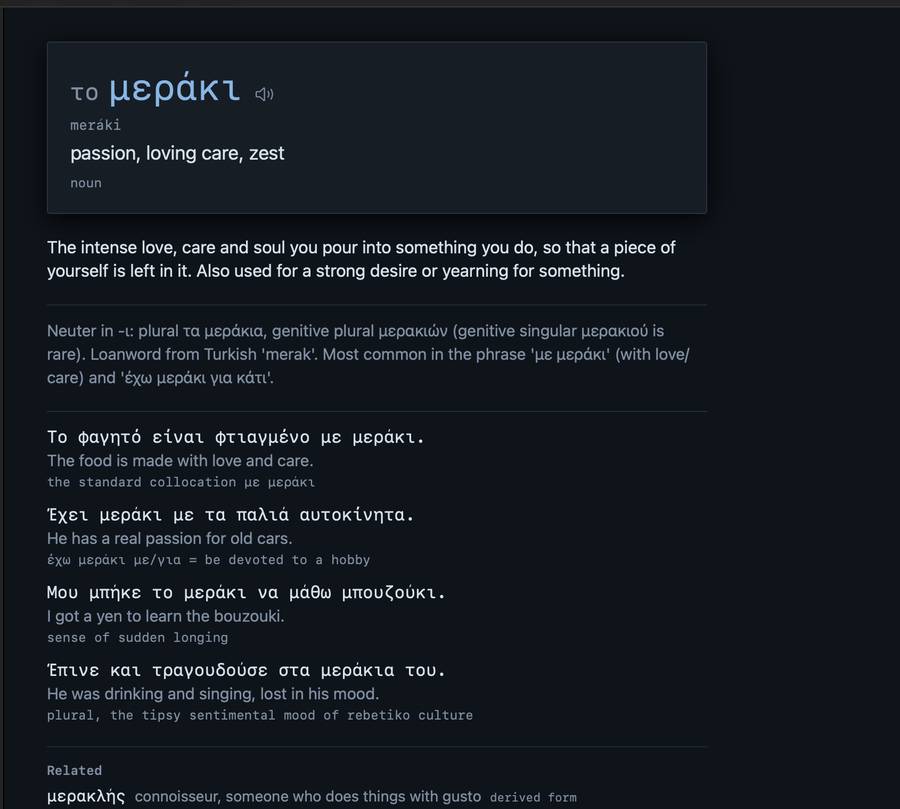
Meaning, gender, pronunciation, usage and examples, appearing field by field as it works.
three · you
Drill it, on the keyboard
The word alone. Space to turn it over, 1 or 2 to answer. Weakest cards first.
One window, and the same one in a browser
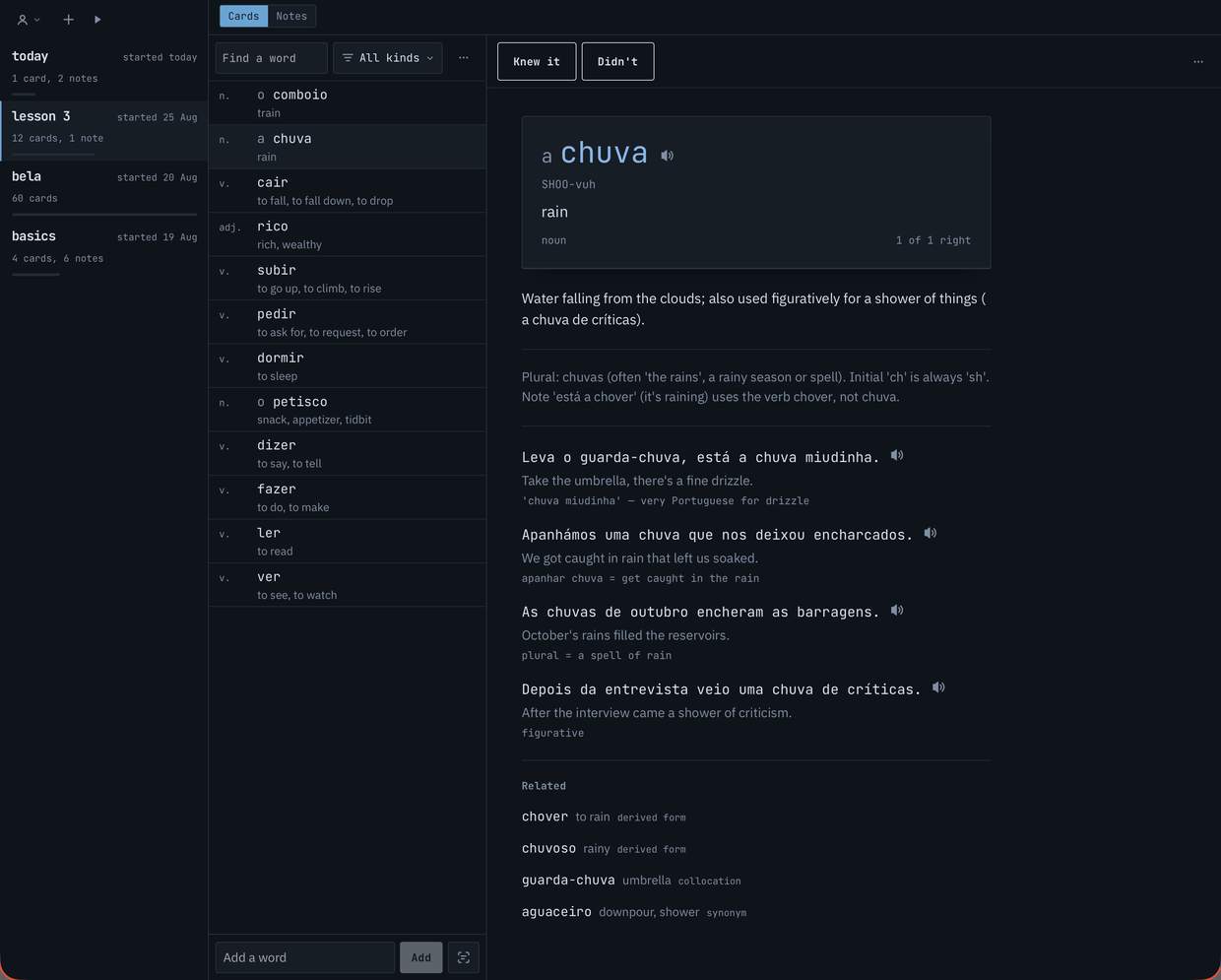
Your decks down the left, the words in the deck you are in, and the card you are reading. Nothing is reached by going back — and the same three panes hold a formula or a diagram as easily as a word.
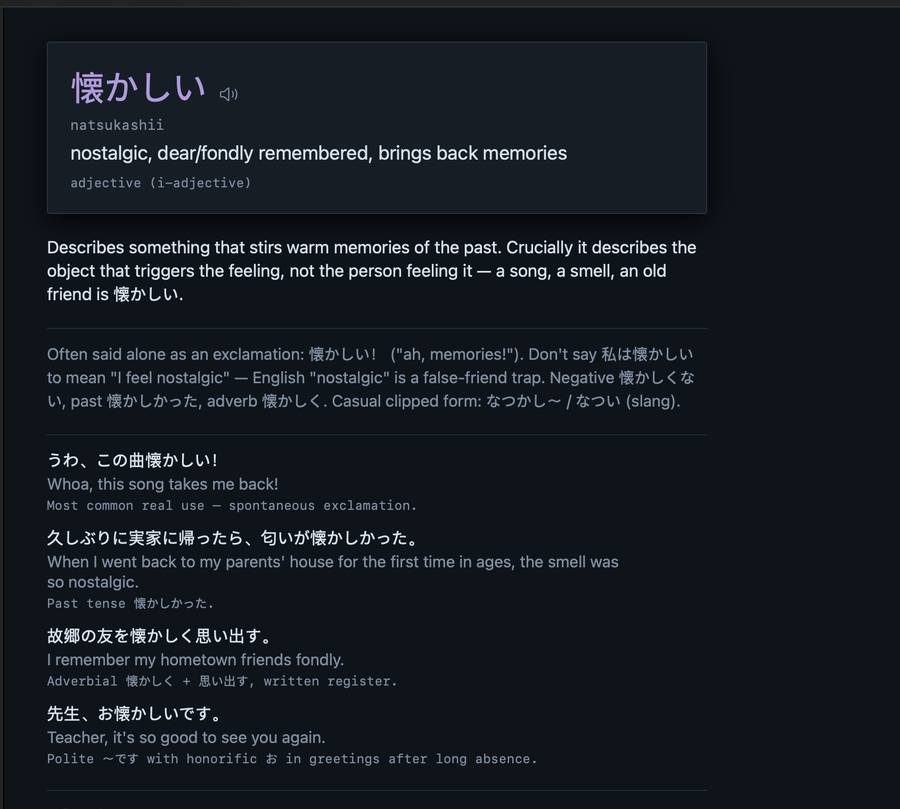
“Crucially it describes the object that stirs the feeling, not the person feeling it. Don’t say 私は懐かしい to mean ‘I feel nostalgic’ — English ‘nostalgic’ is a false-friend trap.”
from the usage note on 懐かしい — written, unprompted, when the word was added
From a page
you are reading
Paste a chapter, an article, subtitles, a menu. acute picks out what is worth a card and writes each one for the sense your text actually used.
what you pasted
O comboio para o Porto parte as oito da manha da estacao de Santa Apolonia. Comprei o bilhete ontem a tarde.
what it found
The accents come back. You typed estacao; the card says estação.
The dictionary form. You saw parte; you get partir, with what you met noted.
Nothing you have. Words already in the deck are skipped.
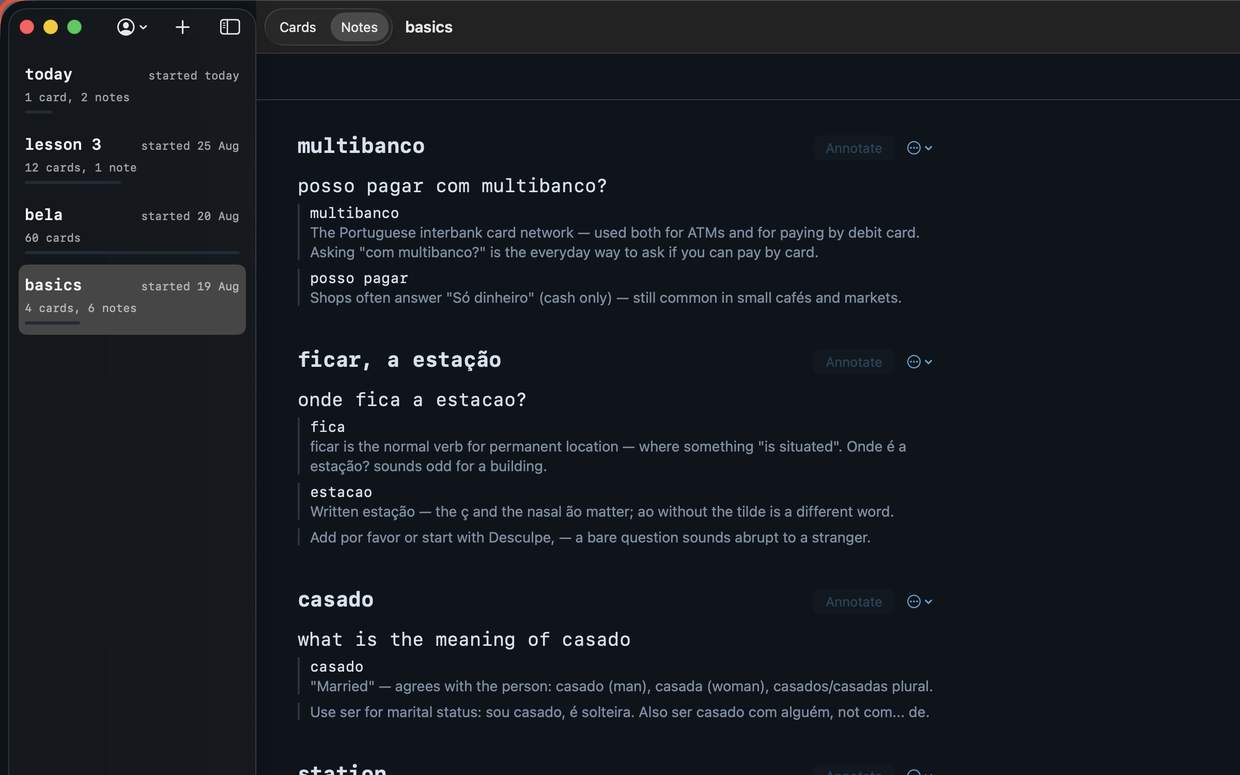
You write.
The margin answers.
A card is one word in, one card out. A note is the other way round: you write down what you heard and half caught, and ask for the margin when you want it — line by line, never uninvited.
⌘↩ asks for the margin · any line can become a card
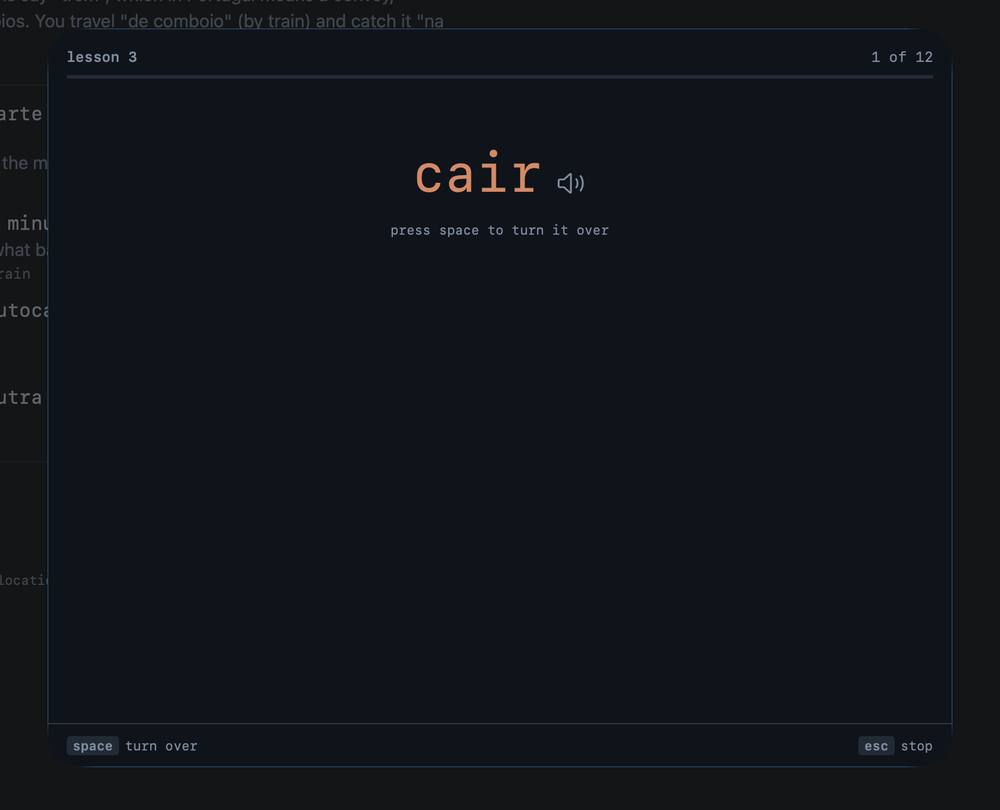
Then it stops helping
The word, alone. No hint, no multiple choice, no first letter. You either have it or you do not, and you are the one who says which.
The queue is weakest first: never seen, then whatever you keep getting wrong. No streak to protect, no algorithm to tune.
What it will not do
Most of the work in a learning app goes into keeping you in it. None of that is here, and its absence is the feature.
No streak. Miss a week and nothing is taken from you.
No leaderboard. You are not learning against strangers.
No points or badges. The reward for learning a word is knowing it.
No feed. Nothing to scroll, nobody to follow.
One reminder, if you want it. At an hour you pick, off by default.
No grading. It never tells you that you knew a word. Only you know that.
And outside the classroom
The same tool, for people whose deadline is life rather than a syllabus.
Living somewhere new
You half caught it at the market. Write the line down; ask the margin that evening.
Working in a second language
Clinical, legal and technical terms as your field uses them.
Translators and interpreters
A personal glossary that keeps the sense, with the sentence it came from attached.
Heritage speakers
You understand every word and can produce none. Study drills production.
Where it runs
One shelf, one account. Whichever you open, the decks and the notes are the ones you left behind on the other.
Nothing to install, and the one you will have on you at the market.
Built for the keyboard: ⌘R to study, ⌘1–9 for decks, and a word added from any app.
Until acute for iPhone lands, acute for Web is built for a phone and works away from a desk.
The fair questions
“Doesn’t this just do the work for me?”
It does the looking up, the typing and the pronouncing — the part that is clerical. It never tells you whether you knew a word; you decide that, every time you turn a card over. The remembering was always the part that could not be outsourced.
“Is this another spaced-repetition app?”
There is no interval algorithm to trust or tune. The queue is weakest first: never seen, then lowest streak, then whatever you keep getting wrong. You can read the rule in one sentence, which is more than most schedulers can say.
“What if a card is wrong?”
Rewrite it, or throw it away. The model drafts; the deck is yours. A card written from a sentence you actually met is usually closer than a dictionary entry, but it is a draft either way.
Bring the first word.
The rest of the shelf fills itself.
Start a deckacute for Web · acute for Mac
Flashcards for education. The card writes itself; the remembering is yours.
Education
Get started
© 2026 acute · Ac is element 89